
Culture
Useful Kyrgyz and Russian Phrases for Travelers
Kyrgyzstan is effectively bilingual. Kyrgyz is the state language and dominant in rural areas; Russian is widely spoken in Bishkek and across the north and functions as a common language between ethnic groups. English is limited outside tourism.
You don't need fluency. But a few words particularly in Kyrgyz, which visitors rarely attempt genuinely changes how people respond to you.
Greetings
Salamatsyzby (Kyrgyz) Hello, formal
Salam (Kyrgyz) Hi, informal
Zdravstvuyte (Russian) Hello, formal
Privet (Russian) Hi, informal
Essentials
Rakmat (Kyrgyz) / Spasibo (Russian) Thank you
Ooba (Kyrgyz) / Da (Russian) Yes
Jok (Kyrgyz) / Nyet (Russian) No
Kechiresiz (Kyrgyz) / Izvinite (Russian) Excuse me / sorry
Kancha turat? (Kyrgyz) / Skolko stoit? (Russian) How much does it cost?
Jakshy (Kyrgyz) / Khorosho (Russian) Good / okay
Numbers in Kyrgyz
bir (1), eki (2), üch (3), tört (4), besh (5), alty (6), jeti (7), segiz (8), toguz (9), on (10)
Worth knowing at bazaars, though sellers will usually just show you a calculator.
Useful in the mountains
Suu (Kyrgyz) water
Nan (Kyrgyz) bread
Chai — tea (both languages)
At (Kyrgyz) horse
Boz üy (Kyrgyz) yurt
A note on place names
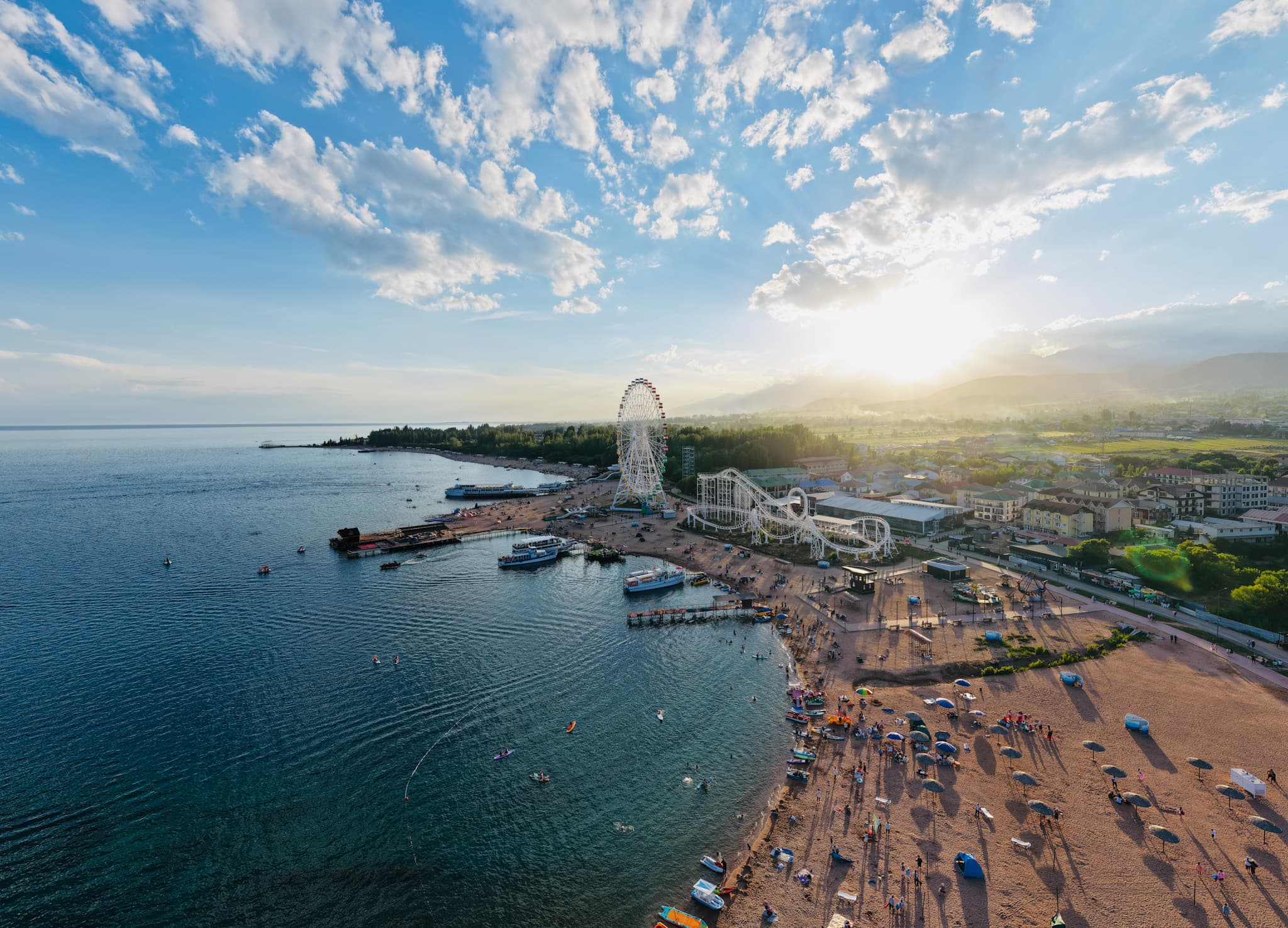
Many Kyrgyz place names are descriptive, which makes the map more readable once you notice the pattern. Kul means lake Issyk-Kul is "hot lake," Son-Kul is "last lake," Kel-Suu is "coming water." Ala relates to variegated or dappled and Chon means big. Once you spot it, half the country's geography starts explaining itself.
Explore Kyrgyzstan with us!